
2026 WINNERS
Awards ceremony Sept. 19, 2026
HONORING EXCELLENCE IN SACRED ARCHITECTURE & THE ALLIED ARTS
Named in honor of Gian Lorenzo Bernini, whose genius united faith, beauty, craftsmanship, and patronage in the service of the Church, the Bernini Awards recognize outstanding achievement in the creation, restoration, and support of Catholic sacred spaces and works of art.
The Bernini Awards affirm that beauty is not ancillary to the life of the Church, but essential to her mission of evangelization, worship, and the sanctification of culture.

ABOUT THE BERNINI AWARDS
The Bernini Awards, presented by the Catholic Art Institute, honor outstanding achievement in sacred architecture, art, craftsmanship, and stewardship in service to the Catholic Church.
Named for Gian Lorenzo Bernini (1598–1680) — whose genius shaped the visual language of the Counter-Reformation and whose works continue to form the Church’s imagination — the Bernini Awards affirm the enduring role of beauty in the life of faith.
Throughout history, the Church has called forth artists, architects, patrons, and stewards to create works that reflect divine order, theological truth, and the dignity of the human person. The Bernini Awards seek to recognize those who continue this sacred vocation in our own time.
These awards are not granted for novelty, but for excellence rooted in tradition, fidelity to Catholic teaching, and the pursuit of beauty ordered toward worship, evangelization, and the sanctification of culture.
Recipients of the Bernini Awards join a living tradition of those who understand that sacred art and architecture are not merely functional, but sacramental — visible signs pointing toward invisible realities.
2026 BERNINI AWARD WINNERS
The Catholic Art Institute extends its sincere gratitude to the distinguished jurors of the inaugural Bernini Awards including Erik Boostma, John Canning, Kathleen Carr, David Riccio, and Anthony Visco
for the time, expertise, and thoughtful consideration they brought to the jurying process.
With 94 submissions received across the award categories, the competition was exceptionally strong. The jury considered many highly accomplished and worthy entries, making the final decisions both challenging and carefully deliberated.
We are pleased to present the 2026 Bernini Award winners, whose work exemplifies the artistic excellence, craftsmanship, theological integrity, and enduring beauty the awards were established to honor.
Below, you will find the winners by category, together with selected images and materials from their projects and remarks from the jurors. This gallery will continue to be updated as additional project materials and jury commentary are added.
We congratulate each of this year’s recipients on this distinguished achievement and thank all who submitted their work for contributing to the renewal of sacred art and architecture in the life of the Church.
ARTISAN & CRAFTSMANSHIP
Processional Madonna and Bier - Dominican Rosary Pilgrimage by ALBL Oberammergau
CHURCH ARCHITECTURE - NEW CONSTRUCTION
Christ Chapel - Hillsdale College by Duncan G. Stroik Architect
CHURCH RESTORATION
St. Andrew's Catholic Church, Roanoke, Virginia by The Durable Restoration Company.
CHURCHES, SHRINES & ECCLESIASTICAL BUILDINGS
Carmelite Monastery of Jesus, Mary and Joseph by Riccardo Vicenzino Architect, Fairfield, PA
FINE ART
Princeps Militiae Coelestis, (Oil Painting) by Edith Pons
INTERIOR DESIGN
St. Augustine Cathedral, Kalamazoo, Michigan by Duncan G. Stroik Architects
STUDENT - EMERGING ARCHITECTURE & SACRED ART
Rekindling the Sacred Within the Traditional Horizon: A Final Resting Place for Venerable Father Emil Kapaun
by Grace Hausladen
HONORABLE MENTION - STUDENT
Cathedral and National Shrine to the Holy Family, Kansas City, KS by Luke Seymour, Civium Architects
WINNING PROJECTS
ARTISAN & CRAFTSMANSHIP
Processional Madonna and Bier - Dominican Rosary Pilgrimage by ALBL Oberammergau


CHURCH ARCHITECTURE - NEW CONSTRUCTION
Christ Chapel - Hillsdale College by Duncan G. Stroik Architect
Website: http://www.stroik.com


CHURCH RESTORATION
St. Andrew's Catholic Church, Roanoke, Virginia by The Durable Restoration Company.
Website:


CHURCHES, SHRINES & ECCLESIASTICAL BUILDINGS
Carmelite Monastery of Jesus, Mary and Joseph by Riccardo Vicenzino Architect, Fairfield, PA
Website: https://www.rsvarchitect.com/


FINE ART
Princeps Militiae Coelestis by Edith Pons, Oil on canvas | 150 x 200 cm | 2025
For commission inquires email info@edithpons.art
Website: http://www.edithpons.art


INTERIOR DESIGN
St. Augustine Cathedral, Kalamazoo, Michigan by Duncan G. Stroik Architects
Website: http://www.stroik.com


STUDENT - EMERGING ARCHITECTURE & SACRED ART
Rekindling the Sacred Within the Traditional Horizon: A Final Resting Place for Venerable Father Emil Kapaun
by Grace Hausladen
For inquires: hausladeng@cua.edu


HONORABLE MENTION - STUDENT
Cathedral and National Shrine to the Holy Family, Kansas City, KS by Luke Seymour, Civium Architects
For inquires: luke.seymour@civiumarchitects.com


JURORS

ERIK BOOTSMA
Erik Bootsma is an award-winning architect practicing in Richmond, Virginia. A graduate of Thomas Aquinas College in California and the Notre Dame School of Architecture, his firm, Erik Bootsma Architect, specializes in sacred architecture, educational architecture, liturgical design and master planning.
His academic interests include philosophy of aesthetics and the canonical requirements of Post Vatican II sacred architecture. He lives and works in Richmond Virginia with his wife and five children.
JOHN CANNING
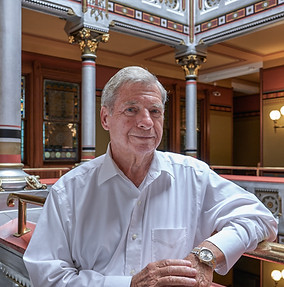
John is an honorary member of the American Institute of Architects (AIA) – the only decorative painter in North America to be so honored. He is also a professional associate of the American Institute for Conservation of Historic and Artistic Works (AIC).
John is the leading authority in the United States on traditional decorative painting techniques and materials and historic color palettes. He studied in Glasgow, Scotland where he attended the Glasgow Stow College of Building, the Scottish Decorative Trades Institute and the Glasgow School of Art. He earned the prestigious London City & Guilds certificate and served his apprenticeship as a church decorator in U.K.
Restoration architects and preservation leaders rely on John’s experience and often seek his advice on the interpretation of historic, period interiors with complex finish systems such as encaustic and distemper paints, simulated inlaid wood-grain, marbling, trompe l’oeil, architectural grisaille, freehand artwork, and old world gilding and glazing effects.
A champion of education, John continues to share his knowledge of the architectural arts with clients and professionals as a guest lecturer at university graduate preservation programs and by leading decorative finish workshops and professional development presentations.

KATHLEEN CARR
Kathleen Carr is an award-winning, classically trained painter, illustrator, and designer. She earned her BFA from the Maryland Institute College .
Her paintings have received recognition from the BP Portrait Award at the National Portrait Gallery in London, The Portrait Society of America, The Art Renewal Center Salon, The Salmagundi Club, The Butler Institute of American Art and many others.
She's an experienced web designer working for major media including Washington Post and National Geographic.
In higher education, she worked as Design Program Head and taught in the undergraduate program at the Corcoran College of Art in Washington DC.
Her design and illustration work has been recognized by Communication Arts, Adobe, and Apple Quicktime.
She studied classical painting with Scott Waddell, of Grand Central Atelier , Robert Liberace of the Art Student's League, and Dan Thompson of Studio Incamminati.
.jpg)
DAVID RICCIO
David is one of the principals of Canning Liturgical Arts, a division of John Canning & Co., and has helped lead the company for over 25 years.
As a Professional Associate of the American Institute for Conservation of Historic and Artistic Works (AIC) and an Association for Preservation Technology (APT) Recognized Professional, he is an industry-recognized expert on historic flat and ornamental plaster as well as decorative painting techniques, gilding, and glazing and has developed multiple innovative solutions for complex restoration conditions.
David has been committed to preserving and restoring beauty in Catholic churches throughout his career. His planning and project management skills keep projects on track and on budget and he has overseen large-scale projects such as the Shrine of Our Lady of Guadalupe in La Crosse, WI, the restoration of St. Marys in New Haven, CT, and the conservation of The Basilica of the Sacred Heart of Jesus, in Hanover PA.

ANTHONY VISCO
Anthony Visco is an internationally recognized sculptor, muralist, and founder of the Atelier for the Sacred Arts in Philadelphia. For more than four decades, he has dedicated his career to the renewal of sacred art through the creation of sculpture, murals, architectural reliefs, and liturgical commissions for churches and shrines throughout the United States. A graduate of the University of the Arts, he studied in Florence, Italy, as a Fulbright–Hayes Fellow and is the recipient of numerous honors, including two Arthur Ross Awards for Excellence in Classical Architectural Sculpture and the Henry Hering Memorial Medal from the National Sculpture Society.
Among Visco's most notable commissions are the Via Crucis and Guardian Angel of the Unborn at the Shrine of Our Lady of Guadalupe in La Crosse, Wisconsin, the Stations of the Cross at Old St. Joseph's Church in Philadelphia, and major sculptural and mural programs for churches, chapels, and sacred institutions nationwide. An accomplished educator and lecturer, he has taught at the Pennsylvania Academy of the Fine Arts, the New York Academy of Art, and the Sacred Art School in Florence, and continues to mentor artists committed to the renewal of the sacred arts through his Philadelphia atelier.
THE BERNINI STANDARD OF BEAUTY
The Bernini Awards are founded upon the classical Christian understanding of beauty articulated by St. Thomas Aquinas: Integritas, Consonantia, and Claritas.
-
Integritas (Integrity or Wholeness) refers to the completeness and fittingness of a work according to its purpose. Sacred architecture and art should exhibit coherence, craftsmanship, durability, and fidelity to their sacred function within the life of the Church.
-
Consonantia (Harmony or Proportion) refers to the right ordering of parts within a whole. Sacred works should demonstrate balance, hierarchy, proportion, and unity, reflecting the divine order present in creation.
-
Claritas (Radiance or Splendor) refers to the manifestation of truth through beauty. Sacred art and architecture should communicate theological meaning, elevate the mind toward God, and reveal the transcendent realities they signify.
These principles provide the philosophical foundation for the Bernini Awards and inform the jury's evaluation of all submissions.
While each category is judged according to its particular discipline and requirements, all award recipients should demonstrate integrity of purpose, harmony of form, and a luminous expression of truth in service to the worship and mission of the Catholic Church.
GUIDING PRINCIPLES
The Bernini Awards are founded on the conviction that sacred art and architecture exist to serve the worship of God and the mission of the Church. Award recipients should demonstrate theological and liturgical integrity, artistic excellence, mastery of craft, enduring beauty, and meaningful contribution to Catholic culture and community.
The Awards seek to recognize works that participate in the Church's living artistic tradition while addressing the needs of the present age. Excellence is measured not by novelty or fashion, but by fidelity, beauty, craftsmanship, and the capacity to elevate the human person toward truth and transcendence.
AWARD CATEGORIES
Work created between 2019 - 2026 are eligible for entry. Submissions older than 2019 are not eligible.
The jury reserves the right to grant or withhold awards in any category and may award Honorable Mentions at its discretion
-
Church Architecture — New Construction
-
Church Restoration
-
Artisanship & Craftsmanship
-
Churches, Shrines & Ecclesiastical Buildings
-
Fine Arts
-
Interior Design
-
Landscape Design — Church and School Grounds
-
Student - Architecture & Art
-
Patronage (nomination)
-
Stewardship (nomination)
Church Architecture — New Construction
Honors newly constructed Catholic churches, chapels, shrines, or monasteries that exemplify architectural excellence rooted in the sacred tradition of the Church.
Criteria of Distinction:
Faithful expression of Catholic theology through architecture
Clear liturgical hierarchy and sacramental symbolism
Excellence in proportion, massing, and materials
Enduring beauty ordered toward worship
Successful integration within its geographic and cultural context
Year of creation - 2019 - present
Eligible projects must be completed or substantially completed.
Church Restoration
Honors outstanding renovation or restoration of an existing Catholic church or chapel.
Criteria of Distinction:
Respect for the original architectural character
Research & investigation into historic conditions
Restoration of sacred hierarchy and devotional clarity
Improvement of liturgical function
Quality of craftsmanship and materials
Renewal of beauty in continuity with tradition
Projects may include restoration, renewal, or corrective renovation.
Artisanship & Craftsmanship
Recognizes exceptional craftsmanship in works created for Catholic sacred spaces.
Eligible works include, but are not limited to:
-
Stone or wood carving
-
Metalwork
-
Altars, reredos, tabernacles
-
Liturgical furnishings
-
Decorative architectural elements
-
Criteria of Distinction
-
Mastery of traditional craft
-
Use of noble and durable materials
-
Precision, integrity, and artistic discipline
-
Harmony with sacred architecture
-
Evidence of vocational craftsmanship ordered toward worship
Churches, Shrines & Ecclesiastical Buildings
Honors architectural or design excellence in parish-related buildings serving the broader life of the Church, including:
-
Rectories
-
Parish halls
-
Catholic schools
-
Formation centers
-
Convents or religious houses
Criteria of Distinction:
-
Architectural harmony with the church building
-
Human scale and dignity
-
Contribution to community life
-
Beauty appropriate to function
-
Integration of Catholic identity in design
Fine Arts
Recognizes excellence in sacred visual arts, including:
-
Murals
-
Renderings
-
Painting
-
Sculpture
-
Mosaic
-
Stained Glass
-
Sacred Books & Manuscript Arts
-
Textile Arts
Criteria of Distinction:
-
Theological and iconographic accuracy
-
Artistic excellence and discipline
-
Fidelity to sacred tradition
-
Ability to communicate transcendence and devotion
-
Contribution to the Church’s visual culture
-
Both installed works and independent fine artworks may be considered.
Interior Design
Honors excellence in the interior design of Catholic sacred or ecclesial spaces.
Criteria of Distinction:
-
Liturgical clarity and hierarchy
-
Consideration of lighting, furniture, patterns
-
Harmony of materials, color, and light
-
Integration of art, architecture, and furnishings
-
Enhancement of prayerful atmosphere
-
Respect for the sacred character of the space
Landscape Design — Church & School Grounds
Recognizes landscape architecture serving Catholic churches, schools, shrines, and religious institutions.
Criteria of Distinction:
-
Harmony between built form and landscape
-
Sense of order, procession, and sacred approach
-
Use of traditional or symbolic design language
-
Contribution to contemplation and community
-
Long-term sustainability and beauty
Student — Emerging Architecture & Sacred Arts
Applicants should identify their institution (if applicable), degree or program of study, current professional status (Student, Recent Graduate, or Early-Career Practitioner), and anticipated or actual graduation year.
Eligible entrants include:
-
Students (18 years or older) currently enrolled in an architecture, art, design, preservation, or related degree or certificate program.
-
Recent graduates (within five years of graduation).
-
Early-career practitioners (within five years of beginning professional practice or licensure, where applicable).
Criteria of Distinction:
-
Demonstrated understanding of sacred tradition.
-
Artistic or architectural promise.
-
Clarity of theological and liturgical intent.
-
Technical and compositional skill appropriate to the entrant's level of experience.
-
Capacity for future contribution to the Church.
Nomination-Only Awards (No Entry Fee)
Patronage — Catherine de Bologna Award
Honors individuals, families, or institutions whose generosity and vision have made significant works of sacred art and architecture possible.
Criteria of Distinction:
-
Courageous commitment to beauty
-
Leadership in restoring or commissioning sacred works
-
Support extending beyond a single project
-
Lasting impact on parish, diocese, or culture
-
Patronage understood as service to the Church
-
This award affirms that great sacred art has always depended upon faithful patrons.
Stewardship - St. Benedict of Nursia Award
Recognizes exemplary care, preservation, and guardianship of Catholic artistic and architectural heritage.
Eligible recipients may include:
-
Clergy
-
Religious communities
-
Parishes
-
Institutions
-
Criteria of Distinction:
-
Faithful preservation of sacred heritage
-
Responsible maintenance and care
-
Long-term vision
-
Protection of beauty for future generations
-
Witness to continuity within the life of the Church
ELIGIBILITY
-
Projects must serve the mission and worship of the Catholic Church
-
Submissions may be made by architects, artists, designers, clergy, patrons, or institutions
-
Completed works are preferred
-
Proposed works are eligible only in designated categories
-
Conceptual work without serious institutional intent may be declined
-
Projects previously submitted to other awards competitions remain eligible provided they satisfy all Bernini Awards eligibility requirements.
-
Attendance at the awards ceremony is encouraged but is not required to enter the Bernini Awards or to receive an award.
Eligibility Determinations
The Awards Committee reserves the right to determine the eligibility of any submission and to interpret these guidelines where questions arise. Entries that do not align with the purpose, categories, or judging criteria of the Bernini Awards may be reclassified or deemed ineligible at the Committee's discretion. The Committee's decisions regarding eligibility are final.
AUTHENTICITY & AI POLICY
Entries must represent the original creative work of the entrant. Human authorship must remain the primary and controlling force behind the conception, design, execution, and final presentation of the work.
The Bernini Awards recognize that contemporary artists, architects, and designers may employ a variety of digital tools as part of their professional workflow. The use of software incorporating AI-assisted features for editing, rendering, drafting, visualization, image enhancement, modeling, documentation, or production purposes is permissible, provided such tools do not replace the entrant's authorship, artistic judgment, design responsibility, or creative decision-making.
Works substantially generated using text-to-image or other generative AI systems—including, but not limited to, Midjourney, DALL·E, Stable
Diffusion, Adobe Firefly, ChatGPT image generation, Flux, Ideogram, Recraft, or similar platforms—as finished creative works are not eligible for submission.
The Catholic Art Institute reserves the right to request sketches, process documentation, working files, CAD or BIM models, renderings, photographs, progress images, or other evidence of authorship and project development.
Entries found to misrepresent authorship or creative responsibility may be disqualified at the sole discretion of the jury and the Awards Committee.
Review Process
-
All eligible submissions were reviewed anonymously by a distinguished jury of architects, artists, clergy, scholars, and cultural leaders.
-
Identifying names, firm names, studio names, logos, and other identifying information were removed or redacted whenever reasonably possible prior to jury review.
-
The Bernini Awards Jury evaluated each submission independently using the official Bernini Awards Scoring Rubric.
-
The Awards Committee compiled all jury scores to determine finalists and award recipients.
-
This year the jury granted one Honorable Mention.
-
The jury reserves the right to withhold an award in any category if, in its judgment, no submission meets the standards of excellence established by the Bernini Awards.
CONFLICT OF INTEREST
Members of the Bernini Awards Jury are not eligible to submit work for consideration during the year in which they serve as jurors.
Members of the Bernini Advisory Council who are not serving as jurors may submit eligible work for consideration, provided they do not participate in the evaluation or deliberation of their own submissions.
Jurors and Advisory Council members are expected to disclose any actual or potential conflicts of interest and to recuse themselves from discussion or evaluation where appropriate.
Jury appointments are made annually by invitation and apply only to the current awards cycle. Individuals who serve as jurors in one year may be eligible to submit work in future years in which they are not serving on the jury.
All eligible submissions are anonymously juried, with identifying information removed before review to ensure an impartial evaluation based solely on merit.
Bernini Logo & Medallion Design
*Bernini Awards identity, medallion design, and program materials © 2026 Catholic Art Institute. Bernini Awards medallion designed by Kathleen Carr using hand drawing, transformed into final graphic using Photoshop and not AI or Photoshop AI tools.